What is the best cleaning order?
The best cleaning order follows a consistent sequence of tasks that minimizes rework, prevents dirt from spreading, and maximizes efficiency. This proven method works room by room, from top to bottom. It starts with ceilings, fans, and high shelves, then moves to furniture and surfaces, and finishes with baseboards and floors. It also follows a dry-to-wet progression: dust first with a microfiber cloth or vacuum (to capture loose particles), wipe and disinfect next (to tackle sticky residue), and mop or wet-clean last (to avoid tracking dirt back onto freshly cleaned areas). This approach ensures every pass through your home leaves it cleaner than the last, without the frustration of re-dusting mopped floors or streaking windows with fallen dust.Step-by-step ideal cleaning order
1. Start with decluttering the whole house
Before touching a cleaning product, remove clutter to create clear workspaces.- Pick up and dispose of trash, recycle papers, and gather stray items like shoes or mail.
- Collect dirty dishes, laundry hampers, toys, and pet items; put them in their proper spots or temporary bins.
- Clear all counters, tables, nightstands, and floors so you can access every surface without obstacles.
2. Dust high to low
Work gravity’s way: capture dust before it falls onto freshly wiped areas. Use a microfiber cloth, duster, or vacuum with a brush attachment.- Start overhead: Wipe ceiling fans, light fixtures, crown molding, and corners for cobwebs.
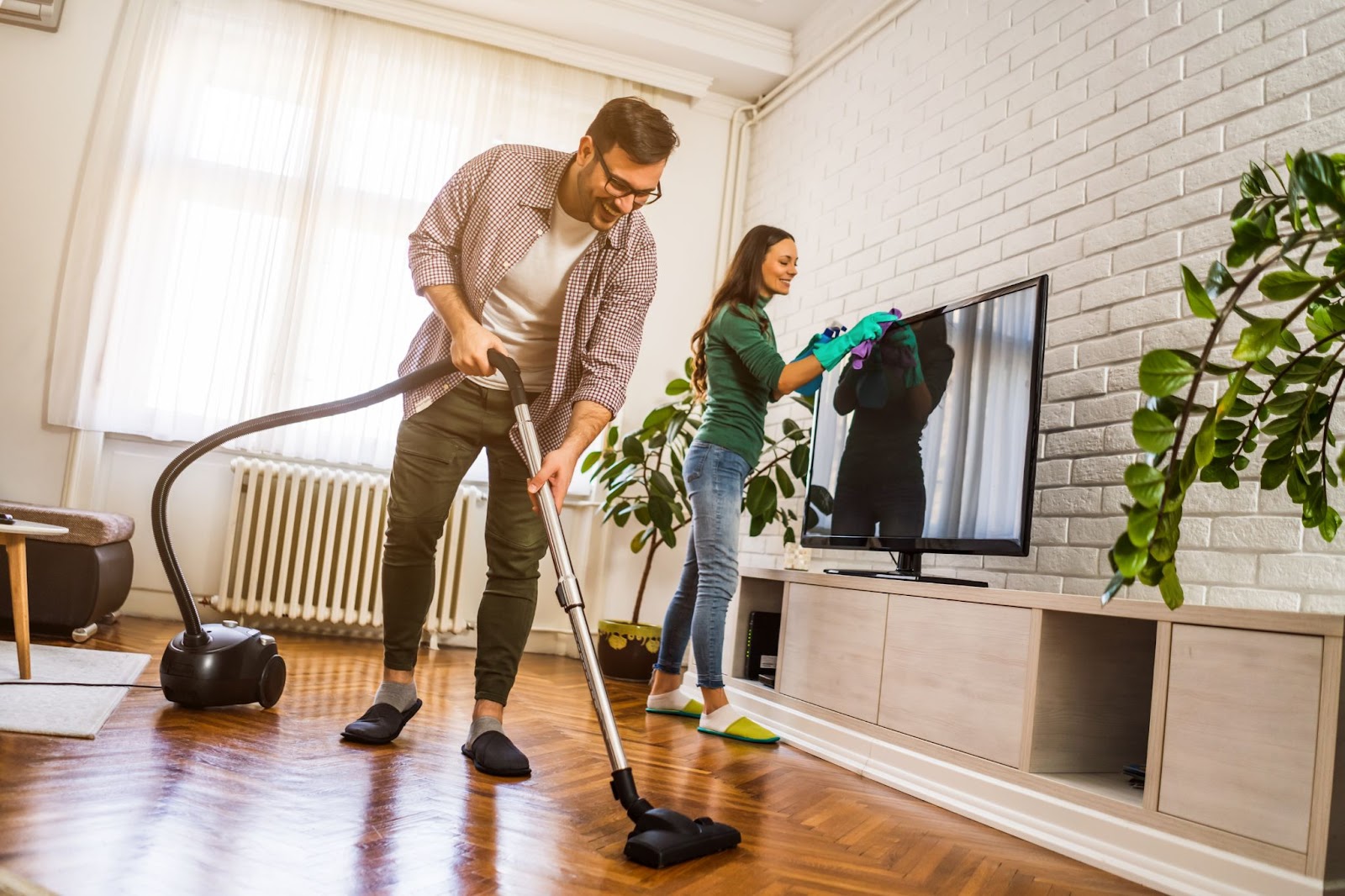
- Move to mid-level: Dust shelves, décor, picture frames, TV screens, and window blinds.
- Finish low: Tackle baseboards, door frames, and the tops of low furniture or radiators.
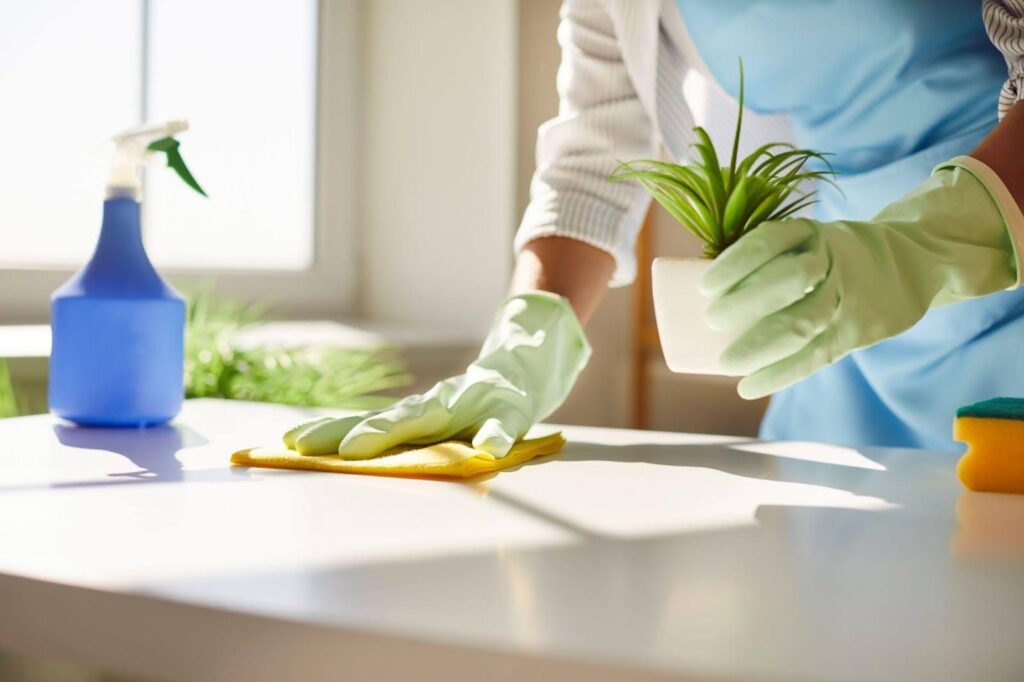
3. Wipe and disinfect surfaces
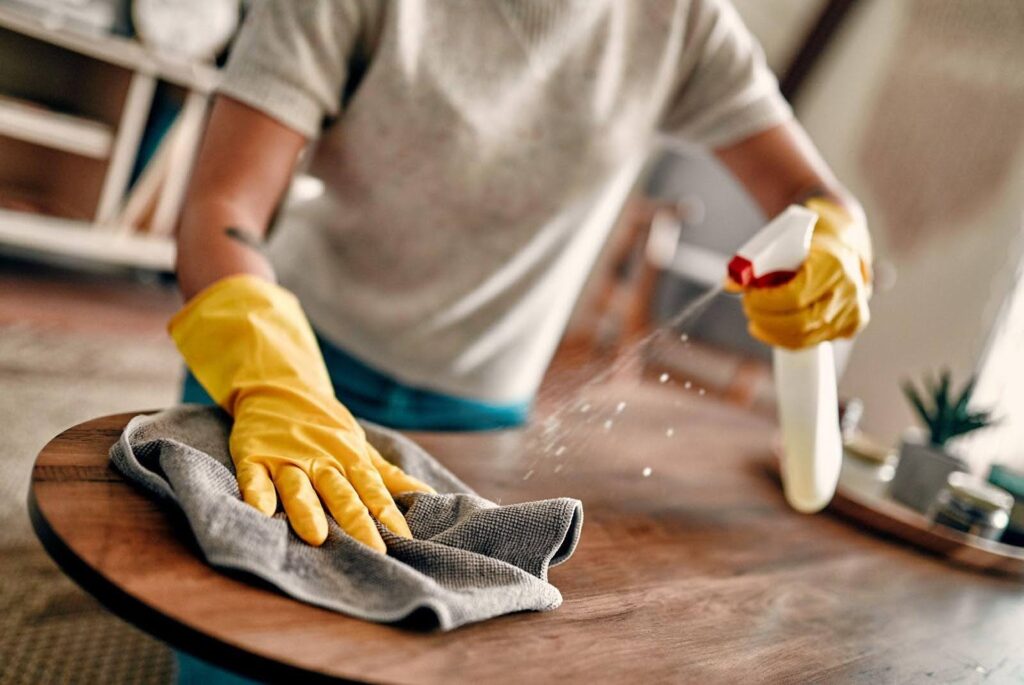
Now tackle sticky grime and germs with the right cleaners for each material.- Kitchen and living areas: Use all-purpose spray on counters, tables, coffee tables, and electronics.
- High-touch zones: Hit doorknobs, light switches, remotes, cell phones, and railings with disinfectant wipes or EPA-approved sprays.
- Glass and mirrors: Streak-free cleaner on windowsills, glass tables, and bathroom mirrors.
4. Tackle bathrooms and the kitchen last
Save these “wet zones” for after dry dusting to avoid re-cleaning floors from splashes.- Bathrooms: Scrub sinks, toilets, tubs/showers, and tile grout. Remove soap scum with a descaler; polish faucets and fixtures.
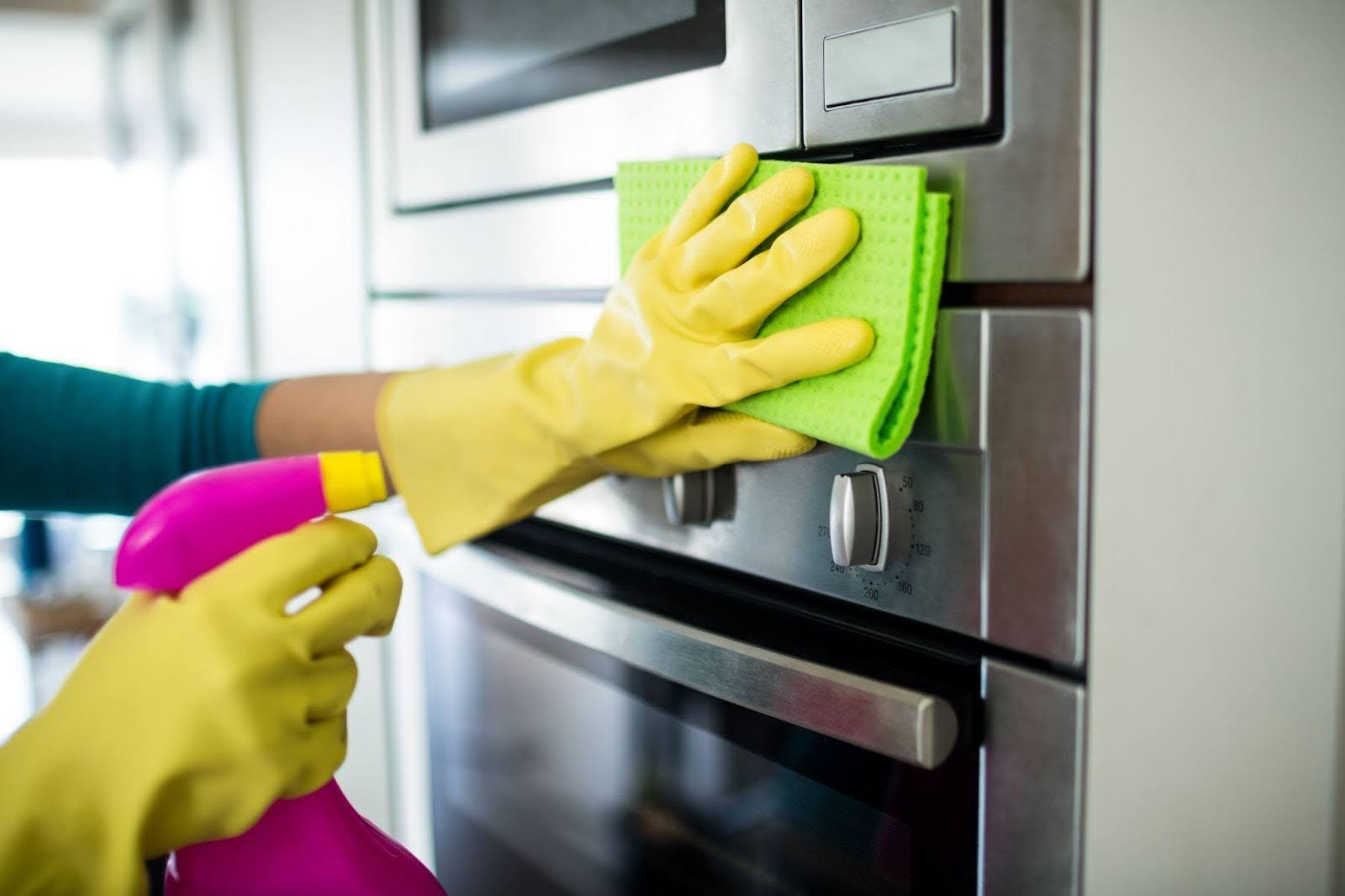
- Kitchen: Degrease stovetops and range hoods, wipe appliance exteriors, sanitize counters and backsplash, and freshen sink drains with baking soda or vinegar. Timing: These rooms generate the most water and debris, so they go right before the floors.
5. Finish with floors
End here so all upper dirt lands on surfaces you can sweep away in one go.- Carpets/rugs: Vacuum every room thoroughly, including the edges, under furniture, and high-traffic paths.
- Hard floors: Sweep or dry mop first, then wet mop from the farthest corner toward your exit door to avoid stepping in dirty water.
Why cleaning order matters
A thoughtful cleaning order makes your routine more efficient and your home noticeably cleaner. Key benefits include:- Reduces duplicate work by preventing you from having to re-clean floors and surfaces
- Improves overall cleanliness by capturing dust and debris in a single pass
- Saves time and energy, especially in larger homes or busy households
- Helps you create a repeatable routine similar to professional general cleaning services
- Minimizes stress — knowing what to do next keeps you from feeling overwhelmed
Common mistakes to avoid
- Starting with floors: Dust and crumbs from higher surfaces will land on freshly cleaned floors.
- Cleaning room by room with no plan: Random efforts often leave key spaces half-done.
- Using wet cleaners before dry dusting: This turns dust into streaks and sludge.
- Skipping decluttering: Cleaning around clutter makes everything take longer and look less finished.
- Ignoring high-touch areas: Doorknobs, remotes, and switches need regular disinfecting in any good cleaning order.
Helpful data and cleaning insights
- Most people underestimate cleaning time, often because of inefficient ordering and backtracking.
- Kitchens and bathrooms take more overall cleaning time due to disinfecting and scrubbing requirements.
- Following a consistent cleaning order can reduce the total time spent over the course of a month.
- Many homeowners who outsource to Utah cleaning services do so to have their kitchens and bathrooms cleaned thoroughly while maintaining a basic weekly routine themselves.
Recommended tools and products
To make any cleaning order more effective, keep these essentials on hand:- Microfiber cloths for dusting and wiping
- All-purpose cleaner plus kitchen and bathroom-specific cleaners
- Glass cleaner for mirrors and windows
- Disinfectant wipes or spray for high-touch surfaces
- Vacuum with a HEPA filter and a good broom
- Mop (traditional or spray) suitable for your flooring