Clear the clutter: The negative effects of the mess
Close your eyes and take yourself to a place where you are surrounded by an unorganized mess. This place could be a cluttered attic, a garage in disarray, an overstuffed drawer, or something entirely different. Now, take a moment to think about how it makes you feel to be in this place. Do you feel overwhelmed? Stressed? Anxious? Wherever the memory took you, the feelings were likely similar. It doesn’t take a psychology degree to see the connection between clutter and chaos and the feelings of being stressed. In medical terminology, those cortisol levels rise. Here’s more about the negative effects of clutter:- Clutter hinders focus. It competes for real estate in your brain, making it impossible to give your full attention to what you should be focusing on.
- Clutter can make you feel inadequate. Excess belongings restrict your ability to live as you wish. A chaotic space often results in depression and low self-worth.
- Clutter affects your behavior and that of others. Our environments energize or drain us. Starting your day in a tidy, purposeful space versus one filled with useless items makes a huge difference. Clutter clouds your mind, mood, and actions and affects those around you.

Clutter clean out: How and where to start
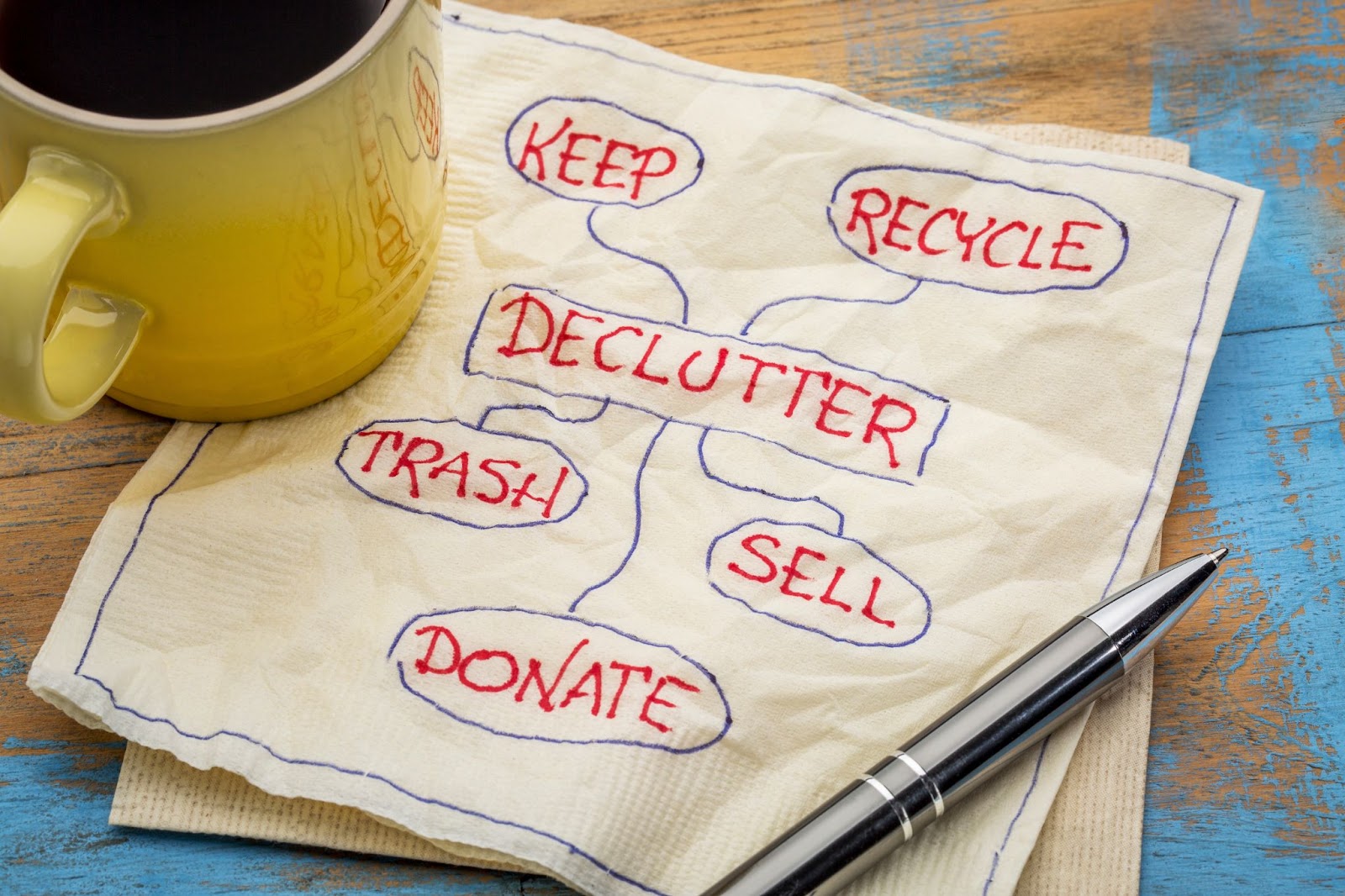
It’s always better to start now instead of postponing your decluttering tasks. Any mess you handle today benefits you tomorrow, even if it’s small. In fact, starting small and remaining consistent is key. Knowing where to start might feel impossible. We totally understand. Rest assured, this feeling is common. Decluttering for beginners is daunting! Our cleaning professionals have found that the best place to start is wherever the chaos bothers you the most. It doesn’t have to be the main clutter culprit. It could be your car’s center console or the top of your dresser. It doesn’t always have to be the overwhelming playroom mess or the desk in your home office, though it could be. Tackling even a tiny, messy spot that triggers your anxiety brings relief and the drive to continue. Once you’ve picked your starting point, the next challenge is deciding what to do with everything you find. This can feel intimidating, especially if you have a lot of stuff. One of our favorite insider tips for this is to dedicate bins in your home for specific items. For example, keep an ongoing bin for items you wish to donate, a bin for items that go upstairs or downstairs, a bin for items that go into the kids’ rooms, etc. This helps you avoid clutter from sneaking back into the space and skip over second-guessing your decisions. This also enables you to stay on task without having to leave the project to put something away every few minutes. When determining what you should keep and what to get rid of, follow this simple rule: if you do not use it or love it, it is likely time to get rid of it. This will help you clear the clutter quickly and effectively. Another helpful question is, if you did not own this particular item or something similar and saw it in a store today, would you buy it again? If the answer is no, then it’s probably not worth keeping. If the answer is yes, that’s great! It means it’s a necessary part of your life, and you need to find a home for it. Taking it a simple step at a time and being 100% honest with yourself about what adds value and brings joy into your life will make decluttering feel more manageable.Clear the clutter: 5 simple steps to clarity
If you are on your first clutter clean out journey or need a little help getting through your current one, follow these simple steps to stay focused and reduce overwhelm. Here are five clear steps to make decluttering easier and more manageable:1. Make a plan
Before starting, identify your decluttering goals. List the areas in your home that require attention, and set a realistic timeline for completing each space. Let’s say you’ve decided your bedside table is your first project for today. Now, your first step is to narrow it down further. Make a plan of attack. First, gather the trash and toss it. Collect any items that do not belong on your nightstand and put them in a bin (don’t distract yourself by putting them away; use those bins we talked about!). Any dishes, papers, medications, books, etc., that do not have a “home” in your bedside table go in the bin. Of course, this is an example, so customize it according to your plan.2. Assign a home for what stays
With clutter gone, organize what remains. Give each item a designated place. If anything lacks a proper home, it will contribute to future clutter. If you can’t find a spot, consider donating it or relocating it so it has a home in a different space.