Western Bowhunting Systems, Equipment & Ethics
Legal Rifle Requirements
Utah
Not Legal:
- Bows under 30 pounds draw weight
- Broadheads smaller than 7/8” cutting diameter
- Crossbows during archery-only seasons without approved disability permits
- Electronic devices that project light or range animals
Legal:
- Lighted nocks
- Illuminated sight pins
Idaho
Not Legal:
- Bows under 40 pounds draw weight
- Broadheads smaller than 7/8” cutting diameter
- Barbed broadheads
- Explosive or chemical arrows
- Crossbows during archery-only seasons without approved disability permits
- Electronic devices that project light or electronically range animals
Legal:
- Lighted nocks
- Illuminated sight pins
- Mechanical broadheads
Wyoming
Deer, Antelope, Black Bear, Sheep & Goat
Not Legal
- Bows under 40 pounds draw weight
- Broadheads smaller than 7/8” cutting diameter
Elk & Moose
Not Legal
- Bows under 50 pounds draw weight
- Broadheads smaller than 7/8” cutting diameter
Crossbows
- Minimum 90-pound draw weight
- Bolts at least 16 inches long
- Broadheads at least 7/8” cutting diameter
Legal:
- Lighted nocks
- Illuminated sight pins
Customer Reviews
What real hunters say about their experience
Justin Richins’ Personal Archery Recommendations
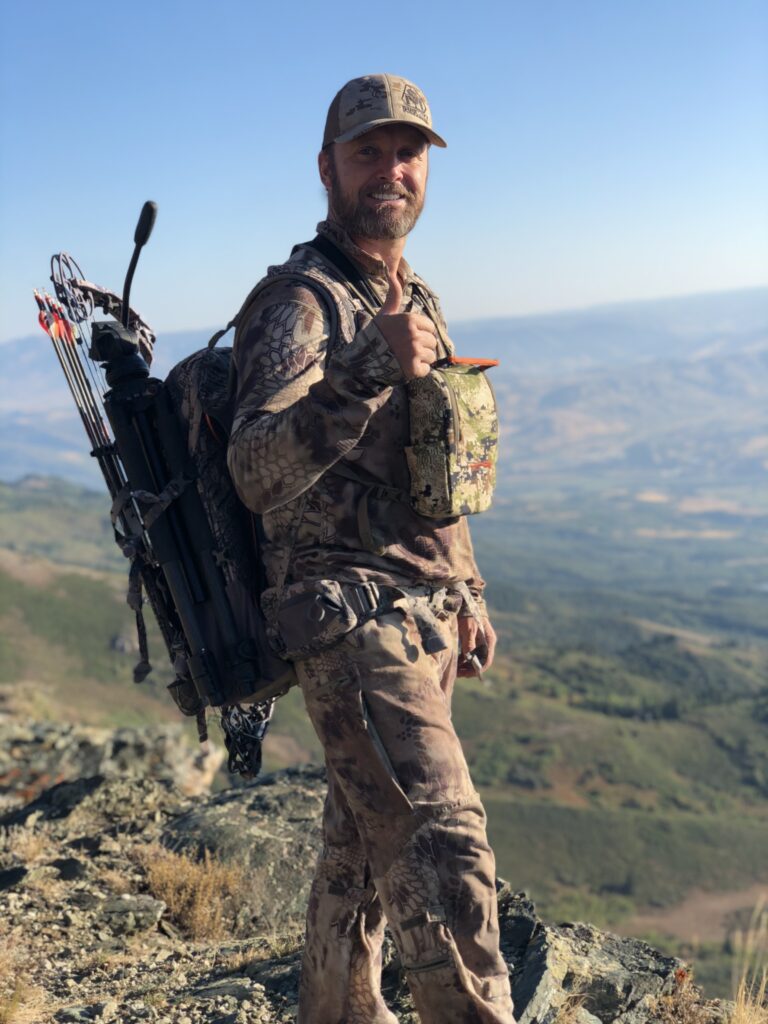
All modern compound bows today are highly capable, and it is honestly difficult to pick a true favorite. In Justin’s experience, it ultimately comes down to personal preference, comfort, and what setup gives the shooter the most confidence and consistency.
Currently, Justin shoots Prime bows, but over the years he has successfully hunted with:
- Mathews
- Browning
- Hoyt
- PSE
- BowTech
Justin prefers an adjustable single-pin sight setup with a yardage wheel/cam for changing shooting distances, but he has used nearly every style of sight system available and believes they all have advantages.
His recommendation is simple:
Pick one setup and become an expert with it.
Again, all shooting distances should always be verified using a quality laser rangefinder.
For mule deer, antelope, whitetail, and Coues deer hunting, Justin personally recommends a minimum 50-pound draw weight with a 100-grain broadhead on a properly tuned arrow setup.
For elk and moose hunting, Justin personally recommends a minimum 55-pound draw weight with a 125-grain broadhead on a properly tuned arrow setup. Justin personally prefers broadheads with approximately a 1” to 1.5” cutting diameter.
Many years ago, Justin became hooked on the original 3-blade expandable Splitfire broadheads by NAP Archery.
Over the years, Justin has harvested:
- Mule deer out to 55 yards
- Elk out to 110 yards
- Moose out to 65 yards
Those shots came after years of heavy practice while shooting 80–90 pound draw weight bows. Today, Justin’s draw weight sits closer to 65 pounds, and he personally limits himself to approximately 50 yards on all big game animals.
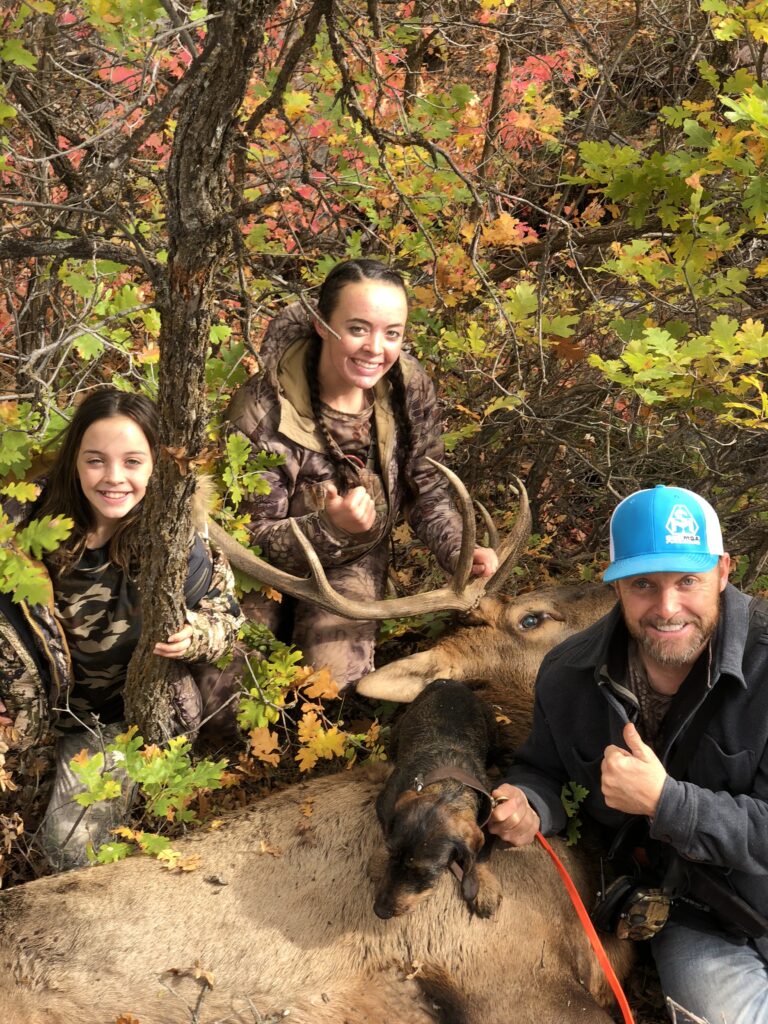
A major reason for this comes from Justin’s years working with his legendary Teckel tracking dog, Remi. Over roughly a decade of tracking wounded mule deer, elk, and moose — from one hour to nearly 48 hours after impact — Justin gained a tremendous amount of real-world experience studying:
- Shot placement
- Arrow penetration
- Pass-through performance
- Blood trails
- Gut shots
- Liver shots
- “Texas heart shots”
- Broadhead failures and successes
Through years working with Remi, Justin gained an enormous amount of real-world experience recovering wounded western big game across some of the toughest terrain in the West. Those recoveries gave Justin firsthand experience studying the real-world reasons animals are either recovered or lost.
While other trackers may have handled more total whitetail recoveries in heavily populated eastern states, Justin’s experience tracking western big game species in rugged mountain terrain is something very few outfitters have ever experienced at this level.
In Justin’s experience, poor shot placement causes far more lost animals than equipment failure ever will.
He has seen nearly every broadhead design on the market both fail and work perfectly under different conditions. Expandable broadheads using rubber bands or retention systems had some of the highest wounded game loss rates he encountered over the years.
Mechanical and fixed broadheads were generally very close overall:
- Mechanical broadheads showed a slight advantage on crossing-angle shots
- Fixed blades like the G5 Montec tended to show slightly less deflection when encountering ribs or heavier bone on entry
However:
None of them perform properly without good shot placement.
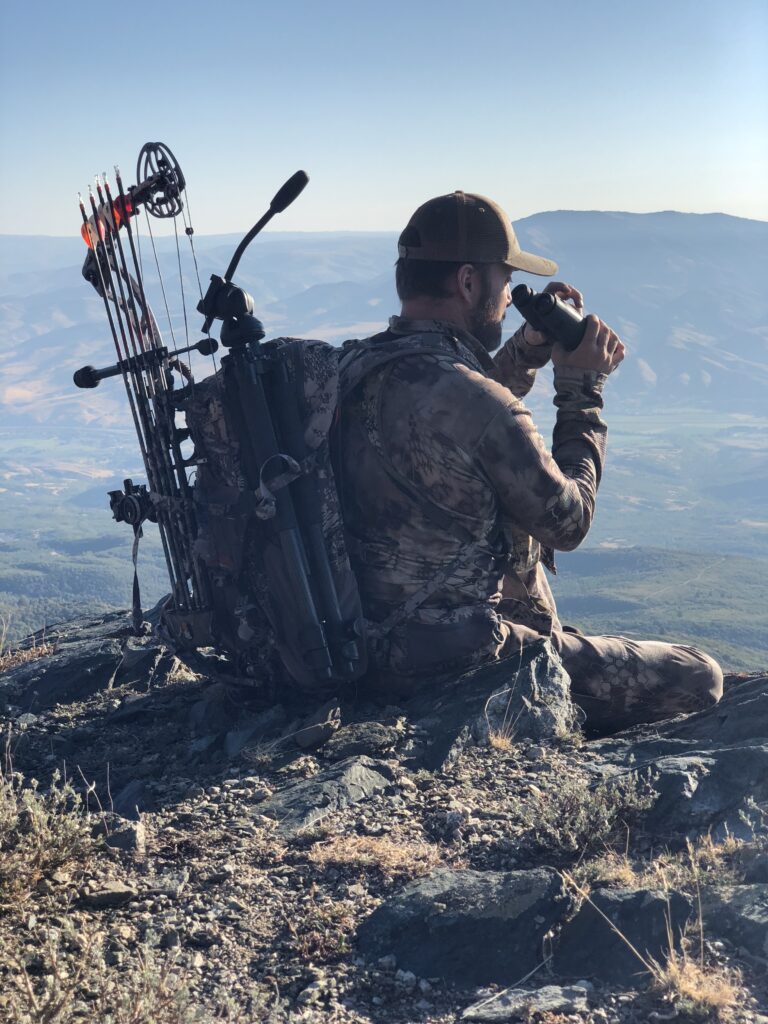
His biggest suggestion to archery hunters:
Use a bow you can still shoot accurately after standing at full draw for an extended period of time under pressure.
Additional recommendations:
- Always use illuminated nocks
- Paper tune your bow and broadhead setup regularly
- Use a simple and reliable bow release
- Avoid overly complicated setups
- Do not shoot beyond 60 yards on live game
- Practice from real hunting positions, not just flat-range shooting
- Practice in wind, awkward positions, elevation changes, and real-world conditions
In real hunting situations: