Justin Richins Precision Hunting
Precision Hunting Training Built From Complete-System Experience
Most shooting schools teach people how to shoot.
Some focus on firearms. Some focus on ballistics. Some focus on reloading. Some focus on long-range shooting.
Very few are built by someone who has spent decades living every part of the process.
For more than 30 years, I have built rifles, tuned systems, guided hunters, observed game behavior, studied bullet performance, and used precision equipment in real-world hunting situations.
Students aren’t coming here to learn how to build rifles.
They’re coming here to learn field application from someone who understands the entire system behind the shot.
That matters because every decision before the trigger is pulled affects what happens afterward.
Most people only see the finished product.
I understand what happens behind it.
Why This Training Is Different
Rifle System Development
Every rifle system begins with purpose-driven component selection and construction. This includes:
- Component selection
- Barrel machining and chamber work
- Threading and fitting
- Stock work
- Trigger selection and proper adjustment
- Optic mounting
- System assembly
- Coating and finishing
- Rifle preparation and break-in
Every component affects the performance of the complete system.
Every system is built with one purpose:
Real-world field performance
Tuning and Validation
- Factory ammunition testing
- Custom ammunition testing and development
- Velocity verification
- Ballistic profile development
- Environmental evaluation
- Precision validation
- Long-range testing from 500–1,400+ yards
Whether using factory ammunition or custom-developed loads, the details matter.
The goal is identifying the combination that provides the highest level of consistency and real-world performance for that particular system.
Real-World Field Application
- New shooter behavior under pressure
- Experienced shooter tendencies
- Bullet performance on game
- Environmental effects
- Shot placement analysis
- Recovery and tracking results
- Animal behavior and reactions
- What works — and what doesn't
Even unsuccessful shots become opportunities to learn.
By evaluating shot placement, bullet performance, animal reactions, and recovery situations, every experience becomes part of improving the process.
There are no disconnected pieces and no middlemen.
Build → Tune → Validate → Hunt → Analyze → Improve
Customer Reviews
What real hunters say about their experience
Posted on GoogleTrustindex verifies that the original source of the review is Google. We hunted with Justin at R&K Hunting Company. It was myself my 2 sons and 2 grandsons. It was by far the best hunt we have been on. The guides were assume they worked very hard to assure we all filled our tags with the animals the suited us. the lodge and food were top notch. We killed 3 mature elk and 4 mature mule deer.Posted on GoogleTrustindex verifies that the original source of the review is Google. Absolutely great experience with R&K! Top notch service! Cant wait to go back!!!!!Posted on GoogleTrustindex verifies that the original source of the review is Google. it was just a Great time from when we got there was awesome The hunting was awesome. Seen a lot of elk and killed a nice bull. Thanks, R &k We’re such a nice tripPosted on GoogleTrustindex verifies that the original source of the review is Google. I had a wonderful hunt and experience with RandK from the inital conversations with Chris about what was available and the booking of my hunt to the end of the hunt itself. Justin is also present and available and was very helpful during my time in Utah. My guide Travis was top notch and his knowledge and experience and genuine concern for me to have a great hunt and experience was evident.The lodge and accommodations were very nice and the food and staff and fellowship with everyone there was outstanding. I hunted Moose @ Timber Ridge/Justin's Morgan Base Camp and have already booked an antelope hunt for next year and am considering a Mule deer hunt and possibly another Moose hunt as well. I highly endorse this organization and know that you will have a great experience if you decide to hunt with RandK. Blessings and happy hunting, Wey Rooks.Posted on GoogleTrustindex verifies that the original source of the review is Google. Excellent Company for a hunt! Outstanding lodge accommodation! The guides Owen and Justin are professional in every way. The cook Tina is outstanding and over accommodating in all aspects. Thank you Chris McAdams for helping set a first of many to come hunts! 😀.Posted on GoogleTrustindex verifies that the original source of the review is Google. We hunted Antelope @ Justin’s Wyoming Camp. Absolutely incredible hunt. 3 great bucks down in 2 days. Will definitely be back.
Precision Hunter Level One
Beginner Precision Hunting
Training Rifle Platform
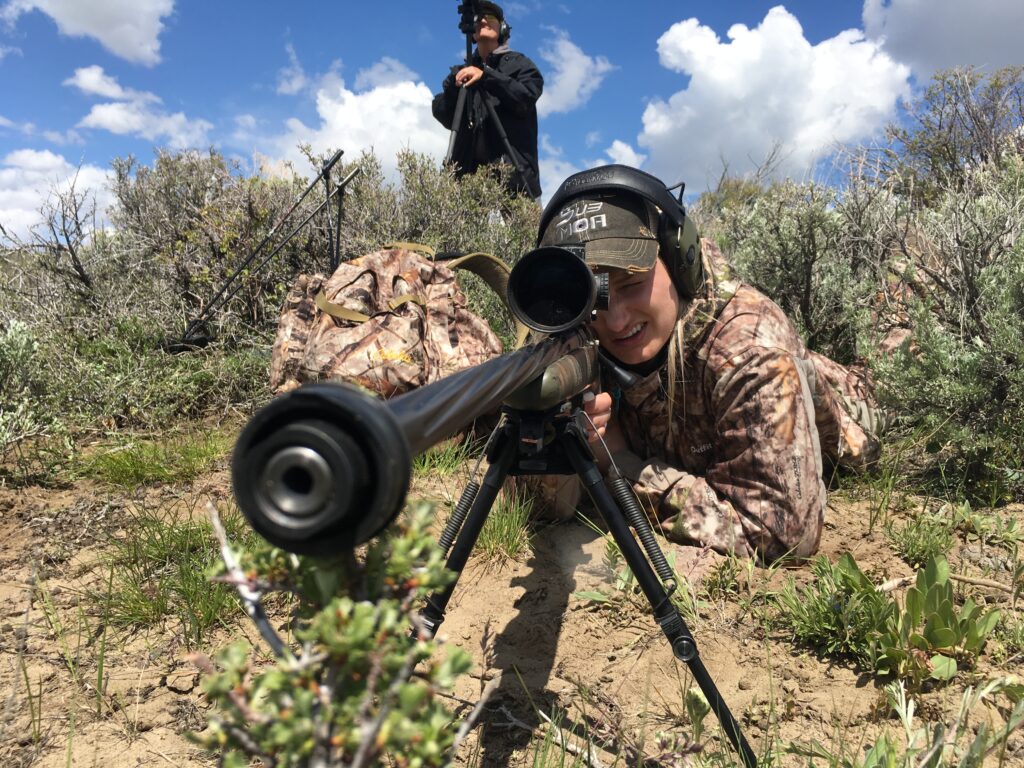
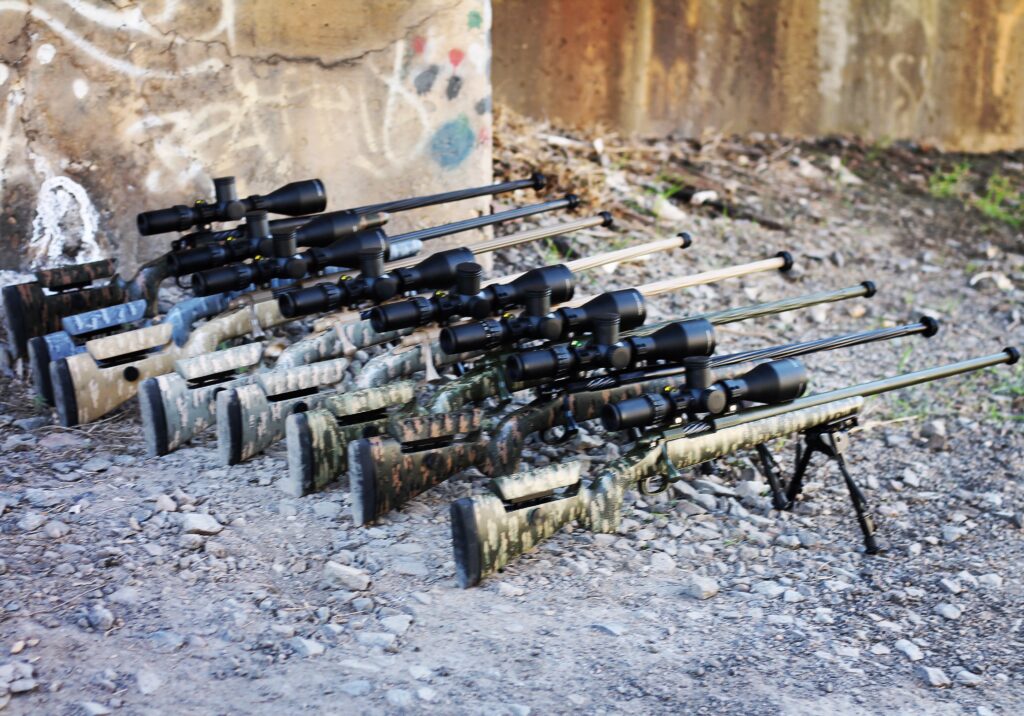
Students will train with complete precision hunting systems designed specifically to maximize comfort, confidence, and practical field performance.
Training systems include:
- Suppressed 6.5 Creedmoor rifle systems
- Approximately 10-pound rifle setups
- Hornady 140–143 grain ammunition
- Huskemaw or equivalent optics with MOA and yardage turret systems
- Swarovski spotting systems with illuminated MOA reticles
- Sig rangefinders
- Kestrel weather meters and ballistic calculators
Students will learn practical use of modern precision hunting equipment and how these systems work together in real-world field applications.
The selected optics systems allow students to understand both quick field solutions and precise ballistic corrections.
The yardage turret system allows for fast practical adjustments, while the MOA turret system allows for precise corrections based on environmental conditions and exact ballistic data.
The 6.5 Creedmoor platform was selected because recoil management is critical during training.
The goal is to eliminate fear, increase comfort, and allow shooters to focus on fundamentals rather than fighting recoil or developing poor habits.
Students of nearly any age or experience level should be able to shoot comfortably and build confidence quickly.
Personal Equipment
Students are not required to use our rifle systems.
Our complete training platforms are provided because they are highly tuned systems specifically built to remove unnecessary variables and maximize confidence, comfort, and learning.
Students are encouraged to bring their own rifle systems if they already have capable equipment they intend to hunt with.
Using your own equipment often provides additional value because students can learn:
- Real-world performance of their rifle system
- Ballistic information specific to their setup
- Strengths and limitations of their equipment
- Proper optic use and adjustments
- Field application with the system they actually hunt with
Prior to training, personal equipment may be evaluated to ensure it is suitable for the course.
The goal is not to force students into our system.
The goal is to make students more effective and confident with the system they intend to use in the field.
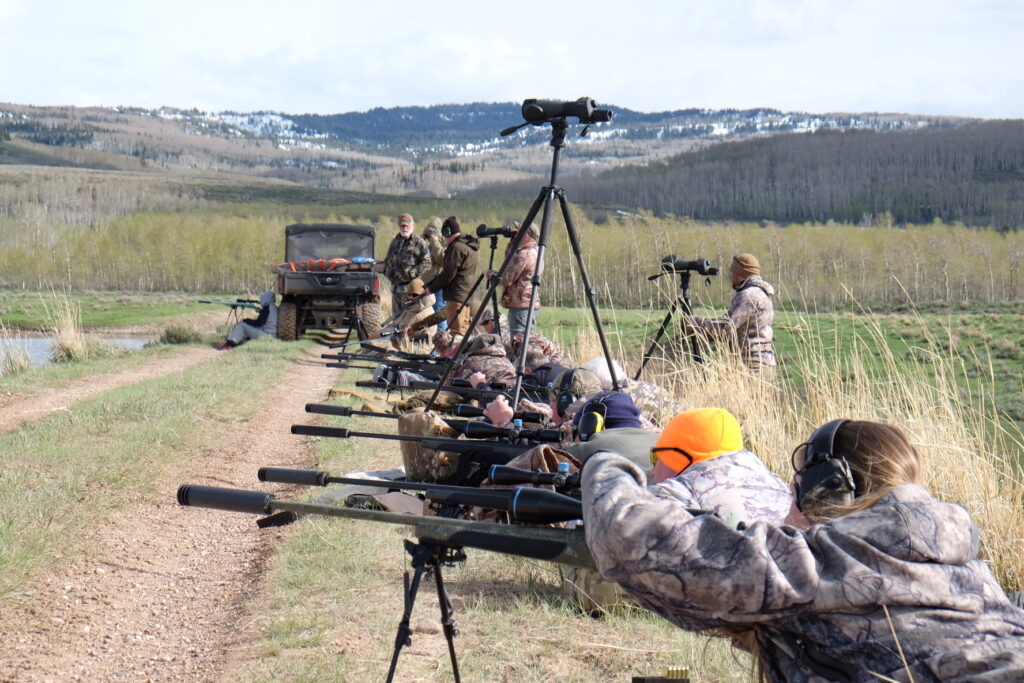
Day One
Fundamentals and Skill Development
Morning Session:
- Safety briefing
• Spotter/shooter communication
• Bench shooting from 500–1,000 yards
• Wind introduction
• Rifle cant awareness
• Shooter error identification
• Impact observation
• Fundamentals and correction
Instructor ratio:
One instructor per four students maximum
Students work in spotter/shooter teams.
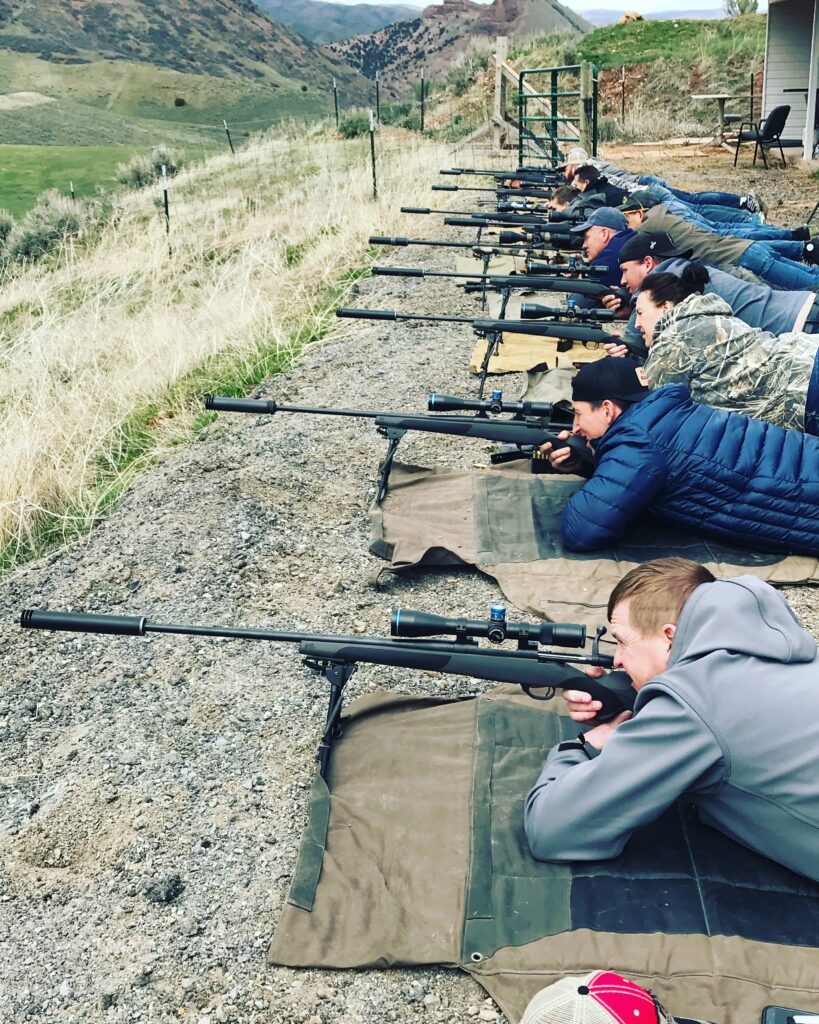
We begin from a stable bench position because it allows instructors to identify and correct errors before moving into field scenarios. Starting from the bench removes many outside variables and allows students to focus on fundamentals, build confidence, and learn proper shooting mechanics before transitioning into field positions.
Students learn to recognize:
- Sympathetic muscle movement
• Position errors
• Trigger control
• Recoil management
• Muzzle jump
• Maintaining sight picture and staying on target after the shot
• Rifle cant
• Velocity variation effects
• Wind influences
• Follow-through issues
Steel targets are designed to allow students to see impacts and learn from misses.
All targets from 500–1,000 yards are approximately 3 MOA in size.
Lunch provided on-site.
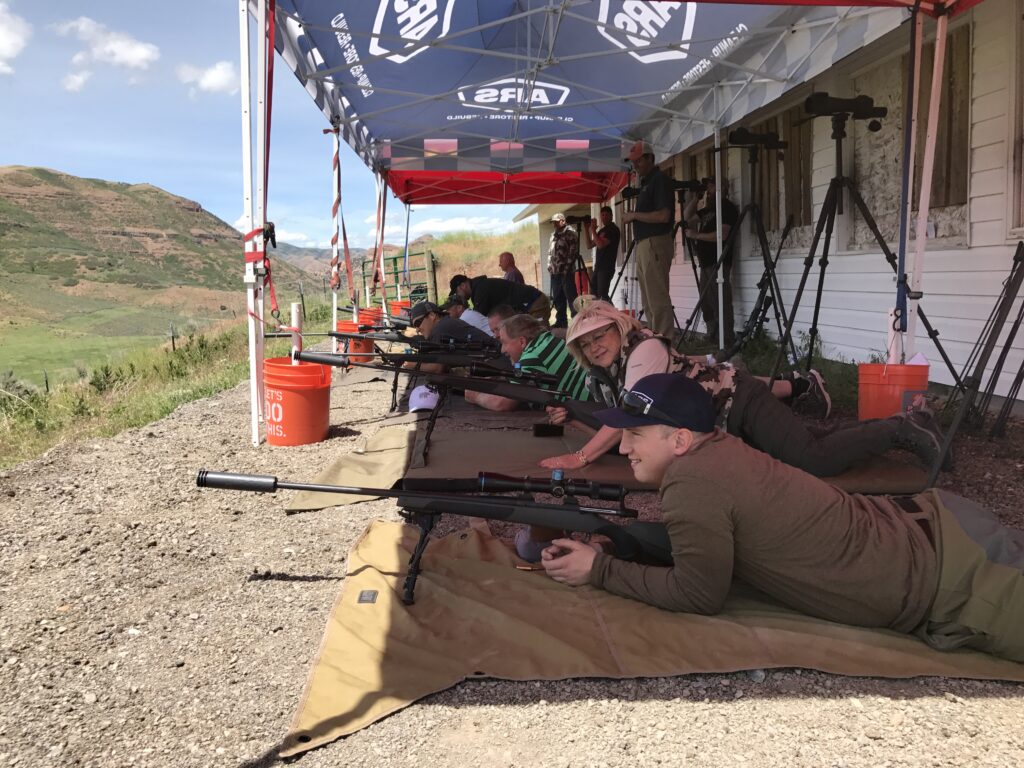
Spotter / Shooter Communication and Teamwork
Precision hunting is rarely a one-person process.
Some of the most important learning during this course happens behind the spotting scope.
Students rotate between shooter and spotter positions throughout training because understanding both roles creates more complete and capable precision hunters.
Training is performed in two-person teams, rotating between shooter and spotter responsibilities.
Students will learn practical application of:
Spotter Responsibilities
- Proper spotter positioning
- Directing shooter hold points
- Calling impacts and misses
- Reading wind conditions
- Spotting bullet trace
- Reading thermals
- Using terrain and environmental indicators
- Locating and identifying targets in field conditions
- Target acquisition
- Using the Swarovski MOA spotting system
- Communicating corrections quickly and clearly
- Identifying shooter compensation and shooter error
- Directing rapid follow-up shots when necessary
Team Communication
Students learn how to function as a coordinated team rather than two individuals performing separate jobs.
Effective communication includes:
- Clear and concise commands
- Building confidence under pressure
- Working through misses and corrections
- Making rapid adjustments
- Maintaining situational awareness
- Understanding each other’s responsibilities
- Efficient target acquisition
- Transitioning smoothly from first shot to follow-up shot sequence
- Learning to trust the spotter’s judgment and corrections during shot execution
- Understanding when the spotter has information the shooter cannot see
Precision hunting is not two people doing separate jobs. It is a coordinated system where the shooter and spotter work together as one unit.
In many situations, the spotter may see wind changes, bullet trace, impacts, misses, terrain influences, or developing conditions that the shooter cannot.
Students learn to build confidence in communication, trust the process, and trust their teammate under pressure.
Students move from bench shooting to field shooting positions.
Positions include:
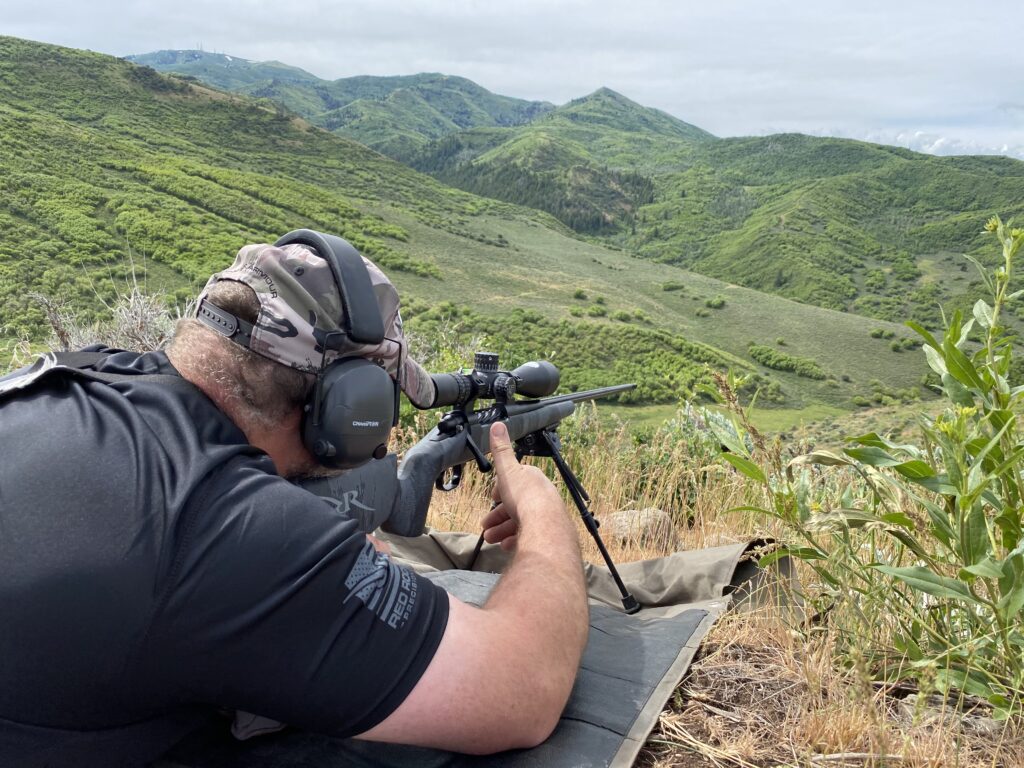
- Prone with bipod
- Sitting with shooting sticks
The afternoon session focuses on applying fundamentals in realistic field positions.
Students continue working in spotter/shooter teams with instructor guidance.
Day Two
Precision Hunting Ranch Experience
Day two moves away from the bench and into the field.
Students travel by side-by-side to a private precision hunting ranch where targets are placed at varying:
- Distances
- Angles
- Terrain conditions
- Elevations
- Sizes
Targets are designed to mimic realistic hunting situations rather than square-range shooting.
Students continue using spotter/shooter communication and apply everything learned on day one.
Students typically receive:
- First-shot opportunity
- One follow-up correction shot
This creates pressure similar to real-world hunting scenarios and reinforces communication, decision-making, and shot execution.
Targets may extend beyond 1,100 yards, with extended-distance targets available depending on class progression.
Beyond The Shot
Precision hunting involves much more than simply hitting a target.
While this course focuses on practical shooting and field application, students will also be introduced to concepts that become increasingly important during real-world hunting situations.
Animal Behavior and Situational Awareness
Students will gain awareness of how experienced hunters evaluate subtle indicators such as:
- Tail movement and position
- Ear movement and direction
- Head position and focus
- Body posture and tension
- Feeding versus alert behavior
- Reactions to environmental changes
- How animals communicate comfort, awareness, and stress
These subtle cues often reveal how safe or unsettled an animal feels from moment to moment and can influence timing and decision-making before attempting a shot.
Because this course does not involve live game scenarios, these concepts are introduced as awareness topics rather than mastered skills.
True understanding comes from repeated observation and real-world experience in the field.
The Goal
The goal of this program is not to create bad shooters or long-range lobbers.
By spending several days shooting from 500–1,000+ yards, students begin breaking through mental barriers and become increasingly comfortable and proficient at distance.
When shooters return to real-world hunting situations, the distances they are most likely to encounter — typically 0–500 yards — begin to feel easier, more automatic, and become extremely high-percentage opportunities.
For most hunters, approximately 90% of their field opportunities should remain within this range until they gain the necessary practice, confidence, and field experience.
Even though many modern rifle systems are fully capable of effectively killing animals at extended distances from 500–1,000+ yards and beyond, shooters should avoid taking those opportunities on live game until they have developed the skills and field experience necessary to make those shots a true high-percentage opportunity.
We consider a high-percentage shot to be 90% confidence and consistency or greater.
Precision hunting is not about shooting as far as possible. It is about making the right shot at the right distance under the right conditions.